And So It Goes

Today is Friday, October 31, 2025. Happy Halloween, ghosties! As you know, I was going to brave the brutal weather yesterday in seeing Psycho in concert at the David Geffen Hall at Lincoln Center, with the New York Philharmonic playing the inimitable score of Bernard Herrmann on stage. For those not familiar with Hermann’s scores, I’ll provide you some background information on this man’s illustrious career later on.

Yesterday the weather was quite rainy and windy, and I had no intention of giving up my ticket to this groundbreaking film that gave birth to the modern horror film by staying home. So I took my trusty pink umbrella, put on my blue-zippered jacket, and left the borough around 3. I was scheduled to meet my friend “Harvey” at The Smith, located on 63rd Street and Broadway, around 4:15. However, I got to the West Side earlier than scheduled, so I darted into Breads Bakery for a cup of coffee and a croissant. Yes, I could still have dinner at 4:30 or 4:45 or even later after nibbling on a croissant just several minutes before.

As I was drinking my third cup of coffee, my phone rings, and it’s Harvey who says he’s already inside The Smith having a beer at the bar. I mentioned I was directly adjacent to the restaurant and that I would come by once I was finished with my repast.

After finishing my coffee and croissant, I walked directly across the street to the restaurant and spoke to a hostess inside. I mentioned that I had a 4:30 reservation and that someone could be here already. I saw Harvey right away; there weren’t that many customers having drinks at the bar at that time, and he started coming toward me.

We were ushered then to a table where we examined the menu and exchanged stories about traveling in this terrible weather. I mentioned I couldn’t believe how my umbrella didn’t self-destruct in these blustery winds.

Dinner was quite good; it consisted of us sharing crispy calamari and my having ricotta gnocchi, while Harvey had oysters initially. I eschewed dessert, but Harvey couldn’t resist the ice cream.

After dinner, we had some time to kill so we walked further uptown and, to our surprise, discovered another Strand Bookstore on 67th Street, I believe. Thus we browsed inside for a while before deciding it was time to head back to Lincoln Center. I almost bought an old Norman Mailer book on the Used Book shelves, but thought better of it.

Now to the concert that began a little after 7:30. The young conductor of the orchestra was Stephen Mulligan and there was a principal violinist by the name of Hae-Young Ham. They appeared on stage, while a large screen loomed behind them. That’s where we watched this 1960 thriller.

We were on the Second Tier, Door 22, Row DD, seats 2 and 3. We were in the last row in the back of the theater. That is the reason, I think, that we found the sound from the orchestra not as overpowering as we thought it would be. Also, the instruments used for the score were all strings here, and a note in the program explains why Herrmann decided to go this way instead of using a full-throttle orchestra for the menacing score heard throughout the shocker. The reason he did this, according to the program, is that he wanted “to complement the black-and-white photography of the film with a black-and-white score,” thus the use of strings only without the employment of woodwinds, brass, or percussion. In fact, Harvey asked me why there weren’t other types of instruments used in this show, and I pointed out Herrmann’s philosophy as the explanation.

Anyway, it seems as the audience thoroughly enjoyed this version of the film. I’m very curious to know how many audience members had seen this film for the first time last night. As I scanned the audience, I couldn’t make out many younger folk – like those in their 20s or 30s. But that doesn’t mean they weren’t there.

As I mentioned, Bernard Herrmann provided six scores for the temperamental director. He started with scoring Hitchcock’s 1955 principal comedy, The Trouble with Harry, 1956’s The Man Who Knew Too Much, The Wrong Man, also from 1956, 1958’s Vertigo, the espionage caper North by Northwest, from 1959, and 1963’s The Birds.

Herrmann was New York-born and bred and graduated from DeWitt Clinton High School in the Bronx (my former childhood birthplace), New York University, and The Juilliard School. He formed his own ensemble in 1931, the New Chamber Orchestra, to explore avant-garde repertoire. In 1934, he joined the staff of CBS as an arranger and rehearsal conductor. His scores for Orson Welles’s radio shows led to an invitation to write the music for two of that director’s films, Citizen Kane (1941) and The Magnificent Ambersons (1942). Thus began a 35-year record of writing musical scores for film and television that kept the composer quite busy. Herrmann died the night he finished scoring the music for Martin Scorsese’s Taxi Driver (1975). In total, Herrmann composed the scores for 51 films, not to mention a good many radio productions, television shows, concert shows, and even an opera.

As for Psycho, the film “set a horror standard for generations to come,” according to our program. It also depicted frank discussions of sexual situations and even mentioned transvestism at the end of the movie, which was quite unusual for commercial films at the time. Also, this was the first time a toilet was actually flushed in a film, when the doomed heroine, Marion Crane, portrayed by Janet Leigh, Jamie Lee Curtis’s mother, flushes a piece of paper down the toilet in her cabin, Cabin 1. This happens just before the shocking and infamous shower scene. If you really examine the thrusting of the knife here, you will actually see that the knife does not penetrate Leigh’s skin at all. This is so different from slasher movies today that depict the most graphic effects of being knifed by dastardly characters all the time.

Anyway, this was Halloween and you wouldn’t know it. We met Elliot’s daughter in Rockville Centre at Press 195, a sandwich and burger joint, where “Emily” paid for our lunch. She wanted to honor both Elliot’s and my upcoming birthday in November.

From lunch, we drove to see “Joseph” at the rehab center where he’s still staying and recovering from surgery on a broken hip sustained in a fall at the center. We stayed about an hour and brought him a slice of pizza and three Diet Coke bottles. He was very appreciative of that. Within 20 minutes or so, we were joined by his wife, “Mary.” This was our cue to leave.

It’s getting late here, so have a good weekend.

Oh, tomorrow Elliot and I will be attending a dinner at Beth-El, in Jersey City, a gala dedicated to Elliot’s late aunt’s estate funding of a refurbished community center opening tomorrow, so I’ll not be writing my blog on Saturday. The event starts at 7, and I don’t expect to be home before 11. I’ll see you on Sunday, November 2.

And so it went!
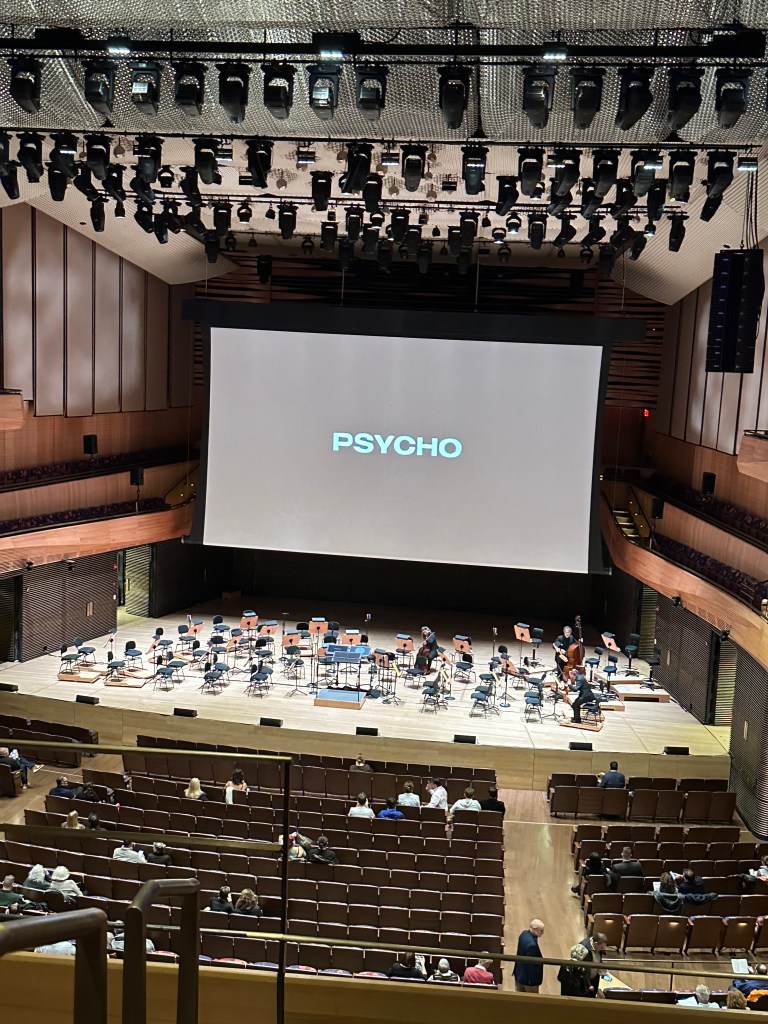
Here’s the auditorium early on before the film began at 7:30.

Here is the playbill from the program at Lincoln Center.

Here is a view from down below. Maybe I could be suffering from “Vertigo” by looking down.


And So It Goes

Today is Sunday, October 5, 2025. Yesterday was quite a busy day for Elliot and me, as we sallied forth early in the morning to meet “Seth” at Jax Inn Diner, in Jackson Heights. Originally, I was going to meet Seth alone, but I decided we could both go because I intended to go to Lincoln Center to purchase tickets for the Psycho concert on October 30. We could then drive to the nearest subway station together and park the car there and pick it up later, which is what we did. We then were going to see a new film at the Angelika Theater called The History of Sound, a gay romantic movie punctuated by the inevitable heartache and loss, much in the vein of Brokeback Mountain, made 20 years ago.

After having a very filling breakfast at the diner (I had a bowl of oatmeal and a short stack of pancakes, which is the diner’s specialty) which was so busy when we got there that we had to find parking on the street, Seth made the proclamation that he was going to Lincoln Center also in order to purchase tickets for Ragtime at the Vivian Beaumont Theater. We arranged a time where we would meet each other after everyone bought their tickets.

So we said our goodbyes outside the diner, while we got into our car and drove to 46th Street and Broadway to take the R train downtown. We got off at 57th Street and 7th Avenue and then walked to Lincoln Center. When we neared the David Geffen Hall where I had to buy the tickets, I left Elliot on a bench across the street from the performing hall.

I asked someone inside the cavernous lobby where the ticket booth was, and she pointed across the hall where the ticket station was. The line was nonexistent, so I waited briefly and stepped up to the ticket agent. I asked for two tickets, since I asked my newfound friend “Harvey” if he wanted to go with me, and he said yes. I interacted with a pleasant-looking agent who indulged my blathering on the new Netflix series on the inspiration for Anthony Perkins’ character in Psycho, Ed Gein. He didn’t hear of it and said he would investigate it.

A few moments later, I spotted Seth by the Lincoln Center fountain and I accompanied him into the next theater where he bought tickets for Ragtime. He also had no trouble buying tickets for a performance in November, I believe.

Before going to the Angelika together, Seth and I made one last-ditch attempt to get tickets for Oh, Mary at the Lincoln Center TKTS booth. By the time we got to the ticket booth, only one ticket was available for the 5 p.m. performance, but there weren’t two tickets available for the 7:30 performance. We exited the line and made plans then to see the film at the Angelika.

We took the subway down to Broadway-Lafayette Street on the F train and then purchased our tickets inside since there isn’t an agent outside anymore. We were a little shocked over the price ($17.50 for senior tickets. I was afraid to ask what the general adult price was).

The film, from director Oliver Hermanus and writer Ben Shattuck, concerns itself with the brief but impactful relationship between two musical students at the Boston Conservatory in 1917. They are Lionel Worthing (Paul Mescal) and David White (Josh O’Connor) who not only share an attraction to the same sex but also share a passion for folk music in particular. Lionel is the more withdrawn and shy of the two; he is from poor folk in rural Kentucky and has been endowed with a vivid aural style and natural vocal ability. At a bar in Boston, he is surprised to hear another student playing and singing a familiar tune from his childhood on the piano. The young man, David, is a charming composition major with a passion for “collecting songs.” This means he travels across remote regions to gather and learn people’s local songs. The two instantly bond over this shared interest, and that night they have sex in David’s sparsely decorated apartment. Their emotional bond grows progressively intimate as they continue to meet weekly, only for their affair to end abruptly when David leaves for Europe to fight in World War I. At that time, the U.S.’s entry in the war leads to the indefinite cancellation of classes, so Lionel reluctantly returns to the family farm.

After the war ends, Lionel hears from David who proposes that he accompany him on a song-collecting trip throughout Maine where they will record the songs of Maine’s villages and farms with a wax cylinder phonograph, and where they will spend their nights camping in the woods. The viewer realizes that this time between the two lovers/friends is truly a high mark in their association with one another, but towards the end of their song-collecting venture, it is David who is grows distant towards the end of the trip. It appears that the horrors of war has traumatized David to the point where he’s unable to give voice to what he has experienced. Lionel eventually leaves Kentucky to pursue a career in music which takes him to Rome eventually and to Oxford where he enters into a relationship with a woman.

The film progresses at a very slow pace and it is here where viewers might have a problem with identifying with the events described within. It is very apparent, however, that Lionel and David’s relationship is tender and endearing from the start, but as time progresses and a reunion becomes less plausible, the seismic impact of David on Lionel’s life becomes increasingly clear, and the weight of the loss grows heavier, until Lionel realizes that this brief episode of his youth has bestowed happiness on him that he will never feel again.

The two principals, Mescal and O’Connor, are quite convincing as very different people. Mescal is more reserved and withdrawn than O’Connor who had more of a worldly upbringing. He mentions that he was raised by an uncle in England after his parents both die. As already mentioned, Mescal is the only son of Kentucky farmers. In the film, he uses his pleasant voice to great effect. O’Connor, however, is more outgoing and charismatic, and emanates a low-level nervous energy through employing gestures like constantly fiddling with cigarettes and putting on amiable, yet somehow uncomfortable-seeming, smiles. His natural charm, however, serves to conceal a well of pain over his homosexuality and his experiences in the Great War.

In an epilogue, Lionel is portrayed as a much older man by Chris Cooper, who has achieved much success as a musicologist, lecturer, and writer living in Boston. It is his reaction to finally receiving those long-lost tapes of songs recorded by him and David in Maine’s hinterlands that should bring a tear to the most hardened among us watching in the audience.

After seeing the film, the three of us walked to Veselka Restaurant on 2nd Avenue and 9th Street where we met Seth’s husband, “Jerry.” He came into the city just to meet us for dinner. When we got to the Ukrainian eatery, he was waiting for us on the corner.

We waited on line for a short while before we were escorted to a table inside. The restaurant was quite busy. Everyone was bustling over us, but a waiter did approach our table within minutes and took our orders. The preferred dish at our table appeared to be pirogies, so we all delighted in having them. I also had mushroom and barley soup first.

This was the end of the ride. After dinner, we said our final goodbyes to Seth and Jerry who took an Uber back to Astoria, while we dealt with the subway. We had to remember to get off at 46th Street and Broadway to pick up our car, not to take the E or F back to Forest Hills. And we did!

I have good news concerning our television set: it’s going to be finally returned tomorrow by “Ernest” who has restored it to its former glory. We’ve only been without it for more than two weeks. There’s certainly more worse things than not having a TV for two weeks, that’s for sure.

As a corollary to seeing Hitchcock’s much-sanitized version of the nefarious doings of Ed Gein in Psycho, here renamed Norman Bates, on October 30, I’ve started watching the series on Netflix. It stars Charlie Hunnam as the “monster,” Ed Gein, living in the nondescript town of Plainfield, Wisconsin. Hunnam plays the serial killer as a shy, withdrawn, mother-obsessed, simple man. He speaks in a very low whisper. As his religious fanatic of a mother, Augusta Gein, is Laura Metcalf who harangues poor Ed continuously with the wages of sin and having carnal relations with women. She is possibly the true monster in the whole grisly sequence of events that unfolded in that sleepy town more than 60 years ago.

The episodes veer from the past chronicling Ed’s descent into madness and to the present day (late 1950s through 1960s) when Hitchcock receives word of such a character from meeting with writer Robert Bloch, the creator of Psycho, to depictions of Anthony Perkins who would be cast as the Gein stand-in, Norman Bates. Here Perkins is wrestling with his own debilitating secret, the secret of homosexuality. He is shown in one scene in the bedroom with 1950s heartthrob, Tab Hunter. Alfred Hitchcock is here played by an anorexic Tom Hollander, who I don’t think looks or sounds like the real Hitch.

Anyway, I do intend to watch the series, which is eight episodes long.

Have a good week.

And so it went!

And So It Goes

Today is Friday, August 1, 2025. Yesterday I was absent from this venue because I decided to see a film at the IFC Center in Manhattan at the last moment, even though weather forecasters were predicting flash flooding for most of the day. I waited until about 5:15 to reserve my ticket to see a 25-year-old parody of beach and slasher flicks called Psycho Beach Party starring the inimitable Charles Busch, Lauren Ambrose, and a very young Amy Adams. Last night marked the second night it was being shown and I couldn’t resist seeing a panel of the actor/screenwriter himself and the director of the production, Robert Lee King, after the movie was screened. I bought a senior membership ticket for the 7 o’clock show online at 5:15, so it was time to leave already.

The theater the film was being screened in was the largest auditorium in the venue, so I found an aisle seat a few rows from the stage. A young, perky woman introduced herself as the publicity director of the theater and said that the Q&A would proceed at film’s end.

The plot involves Florence Forrest (Lauren Ambrose), a sixteen-year-old high school senior looking forward to summer vacation on the beach in Malibu, California, who wants to hang out with the boys, and wants to learn how to surf, even though she’s a girl. Before you can say Gidget, Florence becomes involved with the cool boys on the beach. There’s surfer guru Kanaka (Thomas Gibson), surfers Yo-Yo (Nick Cornish), Provolone (Andrew Levitas), and B-movie actress Bettina Barnes (Kimberley Davies) who’s hiding out in a beach house from her studio that’s supposedly haunted.

Soon Ambrose is dubbed “Chicklet” by her on-again, off-again boyfriend Starcat (Nicholas Brendon), who suggests that she’s not even a real chick since she seems not to be interested in sex. She begins to take surfing lessons from Kanaka, and before long, a series of gruesome murders occurs. Florence becomes a suspect in these murders, as she experiences puzzling blackouts where she adopts another personality, that of Ann Bowman, an angry, lewd bondage enthusiast who makes Kanaka her willing submissive slave.

In this film, there are so many send-ups, primarily of 50s and 60s stock types and psycho killer movies, that the viewer gets lost in the mashup. Busch comes in as police captain Monica Stark who is charged with investigating the murders. It soon becomes known that Stark had an affair with Kanaka years ago before making captain.

The cast is extensive here; there’s Florence’s tightly wound mother Ruth (Beth Broderick) who plays her Donna Reed persona to the hilt. Even Amy Adams is a hanger-on among the beach denizens of this Southern California community. This certainly was one of her first film roles, and I had trouble initially identifying her. There’s also a Swedish exchange student named Lars (Matt Keesler) who is living with the Forrests.

The film works as high camp and it’s not necessary to think too much of its exalted aims; it’s just very funny as it pokes fun at these genres with a very light touch.

The interviews after the film were informative. Ben Brantley, originally from The New York Times, interviewed King and Busch. Busch appeared as himself (not in drag) and was dressed all in white. Busch mentioned that the film was adapted from his 1987 off-off Broadway play and that it was determined that more of a plot had to be inserted into the 2000 film adaptation. Busch also stated that the play was formless; there was no serial murder plot which was now added to the King-directed film. The use of Ambrose was mentioned by either King or Busch as they looked at many actresses for the role of Florence Forrest. I wanted to ask a question concerning Adams being in the film, but I lost my chance. However, her casting was addressed by both King and Busch. The director mentioned how she was a good dancer and that in one scene where there was some sort of dance competition among the beach kids, her better dancing skills had to be toned down a bit to suit her character.

The news out of Washington these days is so awful that I don’t know where to begin commenting on every horrible story. The Jeffrey Epstein scandal just gets weirder and weirder every day, what with the bizarre announcement today that convicted sex offender Ghislaine Maxwell, who was serving a 20-year prison sentence in a maximum security facility, was moved to a lower-security federal prison camp in Texas. This move comes a week after Maxwell met in private with Deputy Attorney General Todd Blanche at the U.S. Attorney’s office in Tallahassee. Details of that meeting have suspiciously not been made public. If this latest action by Dump’s private justice department doesn’t seem a bit suspicious, then we are all morons for not thinking there’s a rotting fish here.

Family members of Virginia Guiffre – one of the women who accused Epstein of sex trafficking and who died by suicide earlier this year – and other accusers of Maxwell and Epstein reacted to the news with “horror and outrage,” saying that it “smacks of a cover-up.” Cover-up indeed. They accused this president of sending a message that “pedophiles deserve preferential treatment and their victims do not matter.” When will Dump’s enablers finally sit down and realize how awful their Supreme Leader is and start putting up some resistance to him? I wonder if that day will ever come.

Have a good weekend, everyone.

And so it went!

Here is former Times critic Ben Brantley and Charles Busch next to him on the right.

Here is Robert Lee King on the left, Brantley in the middle, and Busch on the right.

And So It Goes

Today is Saturday, July 12, 2025. It’s late here, owing to Elliot and I watching a film on Tubi, a 1986 crime thriller directed by John Frankenheimer called 52 Pick-up starring Roy Scheider in a more mature, sleazier role than his character in Jaws and Ann-Margret. The film is based on a book by crime novelist Elmore Leonard who adapted his book for the screen. Scheider plays Harry Mitchell, a wealthy businessman whose life is upended when he he’s blackmailed after being caught in an affair with a much younger woman. Margret portrays his wife who is running for city council and is initially not aware of her husband’s adulterous affair. Scheider decides to play along with his blackmailers but doesn’t intend to pay, which sets up a cycle of escalating violence and threats. The core of the film revolves around the blackmail scheme and Harry’s attempts to outsmart the criminals. We both enjoyed the film but did not enjoy the numerous commercial breaks delivered on Tubi from which we watched the movie.

Earlier, I found myself at the Majestic Theatre feasting my eyes on a blockbuster by the name of Gypsy starring the incomparable Audra McDonald in the title role of Mama Rose. I was able to see this overly satisfying version of a Broadway staple that has had numerous revivals over the years courtesy of Elliot’s former neighbor and friend, “Mary.” She called us two days ago to inform us that she had a ticket to Saturday’s performance and that she was unable to attend this showing. Elliot called yesterday to confirm the giveaway and she said that whoever was going just had to go to the box office and ask for her ticket. Which is what I did! I had no trouble at all. I sat in the orchestra, Row Q, and it was quite a good seat in terms of how close it was to the stage. I took a pair of binoculars, but I really didn’t need them.

How could anyone not appreciate this enduring play with a book by Arthur Laurents, music by Jule Styne, and lyrics by powerhouse Stephen Sondheim, who was very young in 1959 when it first came out. There are so many memorable songs in the score like “Let Me Entertain You,” “Some People,” “Have an Egg Roll, Mr. Goldstein,” “If Momma Was Married,” “Everything Is Coming Up Roses,” “Together, Wherever We Go,” “Small World,” and the powerful finale sung by McDonald in rare form, “Rose’s Turn.” She literally brings down the house in her rendition of a backstage mother who only longed for stardom for her two talented children, but sacrificed everything for their success. At this point, both her daughters have left her to pursue their own dreams of success; her youngest, June, would go on to become the actress June Havoc, and the eldest would evolve into burlesque star and stripper Gypsy Rose Lee, who also wrote books and had numerous roles in films decades ago. On the screen, she was portrayed by a young Natalie Wood. Here she is portrayed by Joy Woods who matures into her own woman who desires to escape from the clutches of her overbearing mother. Danny Burstein plays long-suffering agent Herbie who falls in love with Rose and pleads for her hand in marriage numerous times throughout the production.

For this production, critics have noted that McDonald’s classically trained voice might not always perfectly match the demands of the Gypsy score, which often calls for a more belting style. Think of the late Ethel Merman who has essayed the role of Rose on Broadway decades ago. She always belted out a song. I have to admit when I first heard McDonald sing as in her solo, “Some People,” where she’s first living with her grandfather in a hovel in Seattle, I had some reservations about her more operatic voice succeeding here, but within time, I must have warmed to her vocal style as Rose as time wore on. Her acting was titanic in this iconic role, I thought. She was certainly very memorable. I also have to say that I haven’t seen any other actor in the role on Broadway; I’ve seen the film which starred Rosalind Russell who was actually not much of a singer. Looking up the film with her in it, I did discover that she did some of the singing herself in the film, but her singing was partially dubbed by Lisa Kirk. She was more known for her acting chops.

Anyway, this is what I’ve done today. Elliot was fine staying with Atticus and then going out to a Japanese restaurant on Austin Street.

Tomorrow I’m seeing another but different kind of production, this one being an off-Broadway effort starring Lea DeLaria in something called Brunch Is Gay at 54 Below. My friend “Seth” asked me to see this with him, and I said yes. I have no idea what this show encompasses. And it does include brunch. All I know is that DeLaria is gay and a comedian who also sings. She was in the popular series Orange Is the New Black as Big Boo. Unfortunately, I never saw the series.

Have a good Sunday.

And so it went!

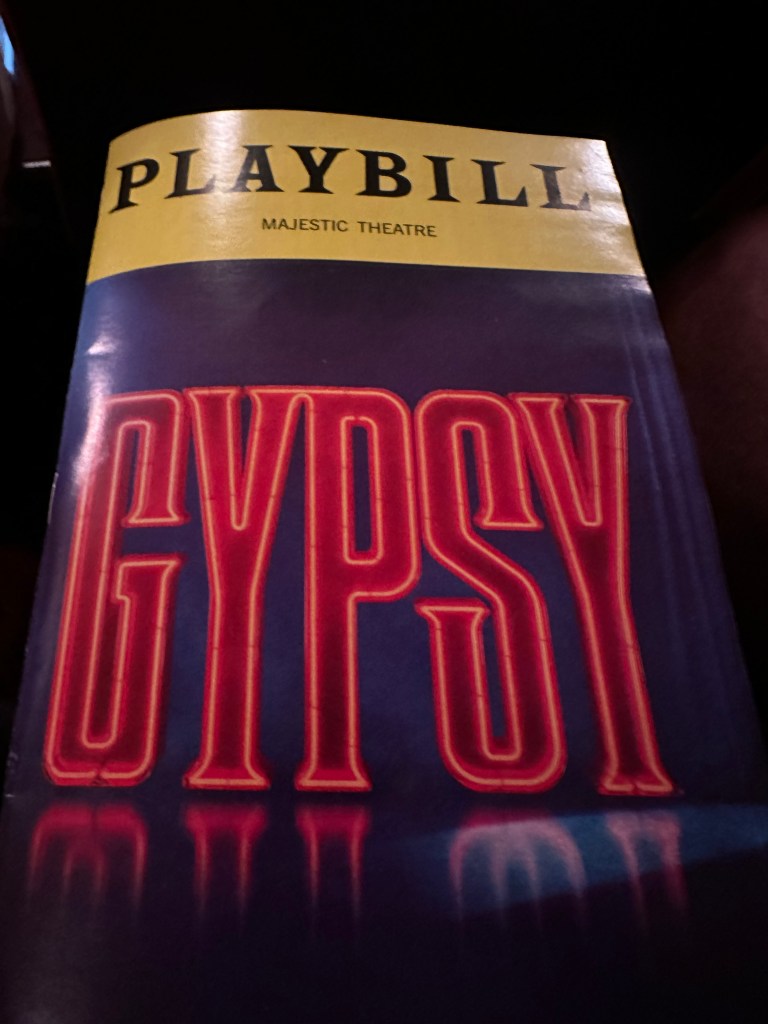
Here is my playbill from today’s show.

Here is Audra McDonald turning her body on stage at the end of the play.

Here’s a better picture of Audra McDonald taking her bows.

And So It Goes

Today is Saturday, June 28, 2025. Elliot and I are back visiting our very good friends in Highland, New York. We came back around 5:30 after stopping in New Paltz and Ellenville for lunch, as we left our friends after breakfast in their complex’s restaurant, From the Ground Up Cafe. Our visit just about consumed 12 hours, as we arrived at “Peter” and “Ted’s” house about 12:30 and left close to 11:30 on Saturday. We had breakfast on the road on Friday at Jackson Hole, then wound our way on the New England Throughway, going through New Jersey first. This time the traffic was minimal, which was fine with me.

We spent the rest of the day Friday catching up with our friends’ experiences since we last saw them months ago. We would have seen the pair sooner if it weren’t for Peter’s ongoing health issues. So we were overjoyed that they didn’t cancel with us for another time. We were even contemplating bringing Atticus up to their apartment, but Elliot nixed the idea at the last moment. As a poor substitute for the real thing, I showed the guys recent videos I took of Atticus over the last several days.

From the beginning, we were treated to a lunch consisting of bagels and cream cheese. We were then informed that at four, two new friends from the development were coming down to have dinner with us, “Lucy” and “Jerrold.” We said wonderful!

We did have dinner with their new friends at 5 or so. We were treated to Peter’s great lasagna, salad, and home-baked apple crisp from Lucy. The meal was topped off with my seven-layer cake from Martha’s Country Bakery.

We all had a lively conversation with this couple, who just befriended Peter and Ted over the last year. We were amazed over Jerrold’s relationship with his many siblings and his early moving around because of his father being in the military. To me, Jerrold reminded me of an anemic Ernest Hemingway. His face was wasn’t as florid as his, but something in the beard and twinkle in his eyes reminded me of the late American author. Lucy had some health issues of her own, as she was in a wheelchair. Of course, Elliot and I wouldn’t ask her why she was in one. I thought she was suffering from Parkinson’s disease since her hands continually fluttered. However, her mood was buoyant and ebullient.

After the couple left, we all settled down to watching some D-minus horror films, movies such as 2019’s Clown and 1980’s Prom Night starring that ever-reliable “scream queen,” Jamie Lee Curtis and Leslie Nielsen (in a serious role) as her father. The first film was laughingly unbelievable, as a group of young teens (instantly interchangeable) wander into a ghost town that hides a funhouse where a murderous clown lives and systematically kidnaps and tortures the unsuspecting young people. Not very credible or suspenseful.

The second film starring Curtis right after her breaking role in Halloween, Prom Night revolves around an early incident in which several youths chase a young girl in an abandoned school, causing her untimely death as she falls out of a window. Years later when all of these youths are in high school, a savage murderer appears at prom night to quickly dispatch all of those he holds responsible for the young girl’s death six years before. In a very old review at the time, the critic reinforced what all of us were thinking as we watched Curtis and other female stars go through the halls of Manchester High School: They all look “as if their school days are a long way behind them.”

The one thing that distinguishes this subpar horror film is that it was one of the first entries into the slasher subgenre. The film, regrettably, has a low-budget feel, poor lighting, and cinematography that detract from its total enjoyment. Anyway, we just enjoyed the camaraderie that came from watching these two potboilers.

After watching these two films, we decided to call it a night, even though I stayed up to read a book I took from the development’s extensive library, which Peter took me to before Lucy and Jerrold arrived: The Killer’s Shadow: The FBI’s Hunt for a White Supremacist Serial Killer, by John Douglas and Mark Olshaker. The book looked interesting when I spied it in the vast room containing many hardcover books and paperbacks. Peter said that I could take it and would not need to return it.

I started to get sleepy by 1, so I called it a night and walked into the single bedroom where all of us slept. Elliot and I slept on the floor on an air mattress.

Today after getting up initially at 7:30 to use the bathroom, I got up finally close to 9:30. Eventually we all made our way to the complex’s restaurant: From the Ground Up Cafe.

The food served here was very tasty; I had the French toast and it was excellent, even the coffee was quite good. We were not able to spend more time with the boys since they were invited to a resident’s 90th-birthday party down the hall.

So we left after 11 and drove to New Paltz to browse the two bookstores in town: Inquiring Minds and Barner Books. These great stores are on opposite sides of the street, Church Street. Oh yes, I did purchase another book, this time at Barner Books, with the title of The Friday Afternoon Club, by Griffin Dunne. It’s a juicy memoir written by the actor, producer, and director of numerous films. Dunne’s aunt was Joan Didion, one of the great nonfiction writers ever to wield a typewriter. As you might know, Dunne suffered a personal tragedy many years ago when his sister, Dominque Dunne, was strangled by a boyfriend, John Sweeney, in a fit of rage after she tried to break up with him. Griffin’s father was Dominick Dunne who wrote about the trial of his daughter’s murderer in a stunning series of articles for Vanity Fair which launched his career as a crime reporter. He also penned several works of fiction, notably The Two Mrs. Grenvilles which became a 1987 television miniseries. Dunne’s book was a fictionalization of the real-life 1955 murder of William Woodward Jr. by his wife, Ann Woodward. This story was also taken up in the more recent series Feud: Capote vs. The Swans that aired on FX a year ago. In that series, Demi Moore played Ann Woodward.

We then drove to Elliot’s old stomping grounds, in Ellenville, where we had lunch at Cohen’s Bakery, a popular eatery and pastry shop. There we had sandwiches and coffee.

Now it was time to drive back to New York. We made only one stop at an antique shop on the road. We certainly didn’t need any new shiny objects to stuff into our one-bedroom apartment. I almost broke down to buy a $22 music box – why I needed something like that is beyond me. So I didn’t buy it!

The ride home was long but smooth. I think we got home close to 5:30.

Tomorrow is the 55th Pride March in New York. Because of the perilous times we’re living in right now, I’ve decided to attend it, possibly with Elliot or not. According to a piece online, “about a million people are expected to gather in Manhattan for the annual Pride March.” Generally, I wouldn’t even go to such a crowd-busting event, but as I said, this cruel regime and its policies are spurring me to go.

I might also hand out water with my friend “Seth,” who does it as a member of his church on 28th Street. I don’t know if we’re going to have dinner afterward either.

Maybe then I’ll see you tomorrow or – if not – on Monday.

And so it went!

And So It Goes

Today is Saturday, June 6, 2025. It’s late here owing to Elliot and I having dinner out with our friend “Patricia” on the occasion of her birthday this coming Wednesday and our watching the second and final episode of a marvelous documentary on the late Paul Reubens, better known as his alter ego, Pee-wee Herman. The documentary is being screened on HBO as Pee-wee as Himself and is only two episodes long. It’s a fascinating, expansive examination of the artist and performer Paul Reubens who achieved stunning success portraying the character of Pee-wee Herman and the devastating fall from grace experienced during the period in the early 90s when he was arrested for indecent exposure in an adult movie house in Sarasota, Florida, where his parents lived. If any of you were a fan of the absurd character known as Pee-wee Herman, this documentary is for you. For me, I was mildly interested in knowing his story. I was not a viewer of Pee-wee’s Playhouse, the iconic show he launched on CBS in the 1980s which ran for five seasons, as I found out. I haven’t watched any of his films either, but I was interested in seeing this documentary since it is narrated by the late actor right before his death on July 30, 2023, at the tender age of 70. The documentary revealed that the actor never told anyone that he was in failing health because that was the type of person he was: secretive. He was also secretive about his personal life since he was gay and this would not score too well with his millions of fans way back then if he were in character as Pee-wee. In the film, Reubens does acknowledge he was in a gay relationship with a painter named Guy Brown that ended before the painter died from the complications of AIDS in the 80s. This is a highly entertaining and ultimately sad portrait of someone who eschewed his true identity in order to pursue the trappings of fame and notoriety. It’s a fitting documentary to be shown in the month of Pride.

In the latest dictatorial move made by this lawless president, the Dump regime has deployed 2,000 National Guard troops to California as a result of ongoing protests against Immigration and Customs Enforcement (ICE) agents for doing their job in Los Angeles. An online article in The Washington Post covers this breaking story and it’s entitled “Trump activates National Guard in L.A. area protests” and it’s written by Maeve Reston and Emily Davies.

This move is strongly condemned by California Governor Gavin Newsom, calling it “purposefully inflammatory and will only escalate tensions.”

Dump immigration czar Tom Homan said authorities were mobilizing “to address violence and destruction” near locations that were raided on Saturday, in an interview – where else? – on Fox News.

This measure can only be seen as Dump making his promise a reality which he posted on the campaign trail that, if elected, he would crack down on Democrat-run cities and states that offered “sanctuary” to undocumented immigrants.

In a statement, White House spokeswoman Karoline Leavitt claimed that “violent mobs have attacked ICE Officers and Federal Law Enforcement Agents carrying out basic deportation operations in Los Angeles.”

“Federal immigration officials began the series of sweeps in Los Angeles County on Friday, including in the fashion district downtown.” Demonstrators began gathering in Paramount, California – about 20 minutes outside of Los Angeles – after a Saturday morning raid near a Home Depot. In a separate clash with police on Friday in downtown Los Angeles, officers reported that a small group of violent individuals were throwing large pieces of concrete.

Newsom stated that the federal government’s move to nationalize the California guard to respond to protests was unwarranted. He claimed that local authorities were handling the protests that unfolded in Paramount.

The Los Angeles Sheriff’s Department, which handles law enforcement operations in Paramount, did urge the public to “exercise the right to protest peacefully with respect for the safety of all community members.”

Don’t you really think this is an unnecessary move on the part of this would-be autocrat who really wants to show his muscle here with respect to a few protests that have not devolved into acts of violence? Their assessment of these protesters as “violent mobs” is just Trump-speak, nothing else! We should not be duped by their overexaggerations of reality in this case.

Have a good Sunday.

And so it went!

And So It Goes

Today is Thursday, May 29, 2025. Today will be brief since it’s late here owing to my watching an HBO special starring openly out comedian Jerrod Carmichael whose special was called Don’t Be Gay and it revels in dirty jokes about his relationship with his white boyfriend and his frustration with his parents. All of the jokes emanate from his examination of his attitude toward himself and his acceptance of his gay identity. But he begins the special with expressing his inadequacy toward having a white boyfriend and how he had to enter therapy to deal with this. The show just has Carmichael stand on the stage at New York’s West Side YMCA in front of a gold curtain where he tells well-written, well-performed jokes. At one point, he admits he has an open relationship with his boyfriend and that his boyfriend fucks a guy with a dick that has “a lot of heft to it.” I thought this was quite funny. Then he slams all mothers for being crazy at one point; his mother, he admits, has become very religious. While his father has stopped talking to a large degree. He notices the difference between gay people who openly admit to being horny, while straight men have to do things like call Sydney Sweeney [a relatively new actress] “attractive” without admitting that they would love to bonk her. Carmichael basically revels in this honesty, while admitting he has issues with expressing feelings of inferiority toward white people. In 2024, this up-and-coming comedian starred in his own reality show called Jerrod Carmichael Reality Show on HBO; I watched some episodes from this series sometime ago and enjoyed what I saw. His humor might not be for everyone since it’s quite raw and contains vulgar language. But what comedian isn’t like this these days? Carmichael was born in Winston-Salem, North Carolina.

After watching this special, I indulged in watching a horror film from 2020: Final Destination which has spawned an entire franchise. This is the film that has as its theme can death be cheated after being tapped to die after a group of young teens bound for Paris exit a jet that eventually blows up in the sky, killing everyone onboard. It is Alex Browning (Devon Sawa) who has a premonition that the plane was going to explode in midair, so he and six other classmates get off the plane and watch it actually explode shortly after takeoff. He and the other survivors have thus cheated death, but will not be able to evade their fate for very long. One by one, the survivors fall prey to ingenious ways of dying. The only actor I recognized in this initial Final Destination film was Tony Todd who was the title character of Candyman some years back. In this movie, he plays a mortician. Of course, Rotten Tomatoes gave this horror entry a very low rating. I thought some of the death scenes were ingenious, but a little too farfetched to be believed.

Anyway, it’s getting late here.

Have a good Friday.

And so it went!

And So It Goes

Today is Saturday, January 25, 2025. It’s getting late here so I’ll just write about the fascinating day that I had with my Astoria friend “Seth” that began at 11 a.m. We first had breakfast at the Bel Aire Diner, located near Seth’s house, on 21st Street. This was one diner I actually never dined in before, so I was quite happy.

The play began at 3, so we had enough time to have breakfast and for us to take the subway down to 14th Street since the theater, the DR2 Theatre, was located on 15th Street. This was a four-character play, as the same two performers played two more characters to round out the play. The actors, McKinley Belcher III and Uly Schlesinger, portray Teddy and Jeremy, two strangers who meet at a bar in a hotel in Amsterdam. The story starts harmlessly enough as Teddy invites Jeremy back to his room near the Amsterdam Airport. The two-hander is set in January 2011.

Harvard grad Jeremy (Schlesinger) has been in Uganda working for the past year as a medical assistant and now he’s supposedly headed home to Boston. That’s when he misses his flight and meets Teddy, a finance guy, who had been with another friend, Ed, who was about to get married but somehow storms out of the same room earlier. This is his straight travel buddy who has a psychotic break before darting out of the room.

The set features a bed in the middle of the room which becomes central to the action in this 85-minute tense drama. You see, Teddy eventually does make a play for Jeremy who freaks out – at least at first. Jeremy’s intense reaction to Teddy’s pass serves as a catalyst for the two men to interrogate each other about their sexualities, and as they explore their pasts, to discover what they’ve both done recently that might have led each other to cause the death of a friend.

In this modern retelling of Sartre’s No Exit, where both men are unable or afraid to leave the room until their secrets are revealed in the 85-minute production, written by Ken Urban, the play explores the guilt, selfishness, and self-deceit plaguing the two Americans as they grapple with the possibility that their questionable behavior may actually be drawing them closer together.

As the play proceeds, we’re introduced to the other two characters: Ed and Nicholas. Nicholas is Jeremy’s gay friend in Uganda who frequented the medical clinic where Jeremy was working. He reveals his love for a married man, Martin, and the two form a close friendship that is marred by the country’s growing homophobia and bans against the “sin.” Belcher portrays Nicholas as a soft-spoken, naive man who isn’t aware of the eventual harm that will befall him as tensions flare up against homosexuals in his country. Schlesinger portrays Teddy’s manic friend, Ed, whom Teddy reveals his feelings for him right before his marriage to Margo. All throughout the production, Teddy’s phone rings and he’s afraid to take the call because of what he might hear.

As the play proceeds, the atmosphere becomes supercharged, with jarring changes in lighting that quickly shift scenes from Amsterdam to Uganda and from present to the past, as the mystery about the men’s pasts and the fates of their friends come into focus.

At the beginning of this shift, I was thrown for a little while as the two actors adopted different accents and dialogue. Then I understood that they were playing different characters in their lives. Reading a review of the play, I learned that Uganda has long suffered from entrenched homophobia, and that as recently as this past April, its courts have reaffirmed the 2023 Anti-Homosexuality Act, which puts the lives of LGBTQ+ people in mortal peril. I loved this ending quote from Pete Hempstead’s review of the play from December 12, 2024 in which he concludes, “It is a horrific thread [Uganda’s condemnation of homosexuality] to weave through a story of two men who come from a country that, supposedly, no longer punishes people for loving whomever they want to love. But then again, it doesn’t have to when it encourages us to punish ourselves.” As in Jeremy’s fear of identifying as homosexual as the phantom of his dead friend Nicholas haunts him even as far away as Amsterdam.

It goes without saying that Seth and I both enjoyed the play. I’m not sure when the play’s run is over, but if this synopsis of it appeals to you, then by all means, get tickets for it before it does close. I just looked it up: the play now ends on February 2, which is not too far off in the future.

After the play, we took the subway (No. 7) to Hudson Yards, which is an indoor upscale shopping mall on 33rd Street and 10th Avenue. It’s near the strange-looking structure called the Vessel which had been closed recently because of several suicides there. To me, it definitely looks like the carapace of some crustacean.

Seth wanted to browse inside Neiman Marcus, but when we entered the mall, we couldn’t find the store. We concluded that it must have closed, probably during COVID-19. Instead, we sat down to have coffee upstairs in the food court.

After this, it was time to ride back to Queens. I got off at Court Square to take the E, which exasperatedly, was not running. Thus I had to walk back to the 7 to take it to 74th Street where I then changed for the E train to Forest Hills.

Anyway, that’s the day.

Have a good Sunday. Tomorrow the weather is expected to be practically balmy, with temps to be in the high 30s, close to 40 degrees. Take out the bathing suits, folks.

And so it went!

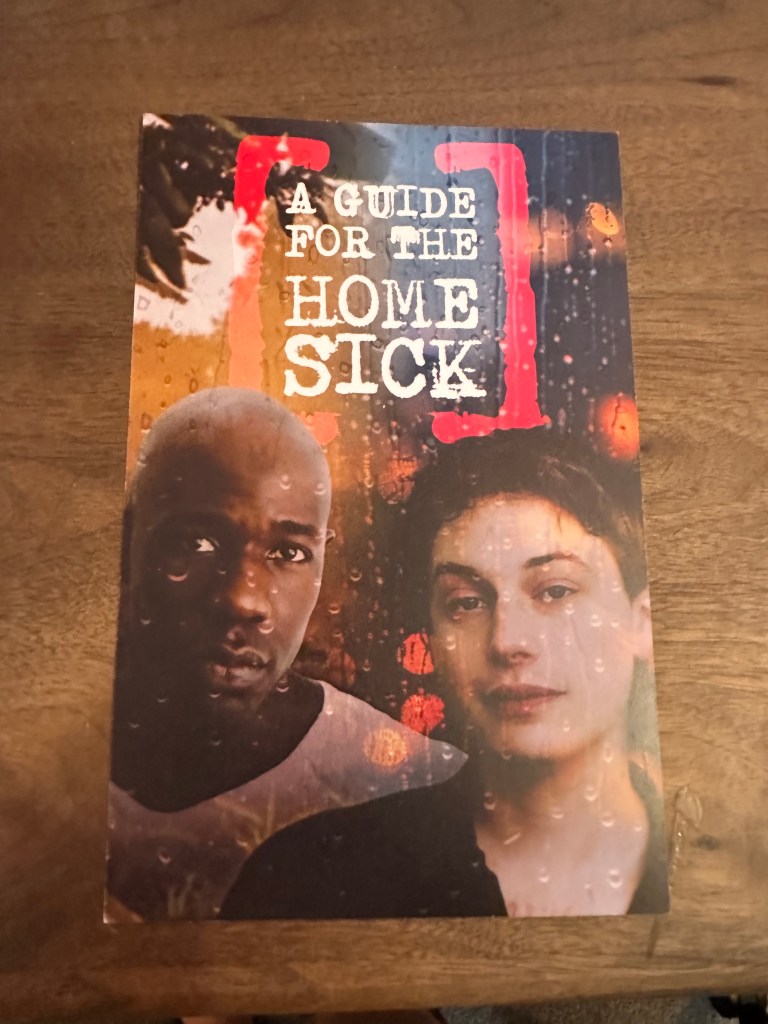
This is the playbill from today’s play.

And so It Goes

Today is Tuesday, January 7, 2025. Though I wrote yesterday that I was going to attend my gay men’s reading club, which I did, I declined to go to the local bar after 8 since I believed it was better to get home early tonight since we’ll be leaving tomorrow for Florida in the afternoon. So I got home quickly – around 8:45 p.m. I lucked out in having an E train rumble into the station on West 4th Street within minutes of getting on the platform.

Today also marked Atticus’s one-year anniversary appointment at Juniper Valley Animal Hospital, in Middle Village, at 11:30 a.m. I wish we didn’t have to take our furry baby out in the bitter cold, but we had no choice. The wind surely was somewhat fierce today. So when it was time to leave, I got the new car and parked out in front for Elliot to take Atticus out in his cat carrier. Then we drove to the vet; on Queens Boulevard, we got stuck in traffic for about 20 minutes because of construction going on in one lane. I believed we were going to get to the vet’s office later than 11:30, but we somehow arrived just in the nick of time. I think we arrived around 11:15.

Inside, we were stuck in the waiting room for about 20 minutes. For the entire drive to the doctor’s office, Atticus was very quiet. He scrunched himself in the rear of the cat carrier, as I sat next to him poking my finger into the black-and-white carrier to try to pet him. Atticus didn’t respond to my ministrations.

Even in the waiting room, Atticus remained quiet. While we waited, other “clients” came in, mostly dogs. At one point, a tall young, tattooed man came in with an Alaskan husky who promptly went to the front of Atticus’s metal house and put his snout smack dab in Atticus’s face. Our cat did nothing.

Finally, we were called into an examining room. Elliot grimly reminded me that this was the same examining room in which we put down Jocelyn, our first cat, in October 2022. In a short while, Dr. McCarthy sauntered in and proceeded to give Atticus a complete examination. He listened for heart murmurs, looked into his mouth at his teeth, and gave him a vaccination. He also trimmed his claws and back paws. All throughout this prodding and probing, Atticus was a true trouper. He didn’t flinch; he didn’t hiss. I was surprised; given how he behaves with us, I expected more fire from him. The vet declared him fit as a fiddle; he did say, though, that he was inclined to gaining a little weight, so he suggested we diminish his supply of dry cat food during the day. I believe Atticus weighed in at 8.5 pounds. He originally weighed in last January at 5.6 pounds when we first adopted him. So there was an increase of about three pounds here over the year. This area is always a sensitive one for indoor cats since they cannot go out.

We were very happy over the salutary report we received from the vet who admitted he had five cats at home. It was time to take Atticus home.

When we dropped Atticus off, I went upstairs with him and gave him two treats for his exemplary behavior. I then went downstairs where Elliot was waiting for me and we went to lunch at Jax Inn Diner, on Northern Boulevard.

At 4, I bid adieu to Elliot and took the subway to West 4th Street. I went to the Jefferson Market Library earlier to see if any copies of this month’s book could be picked up at the front desk and I was told there weren’t any by a librarian on the second floor.

I then walked to the Waverly Diner for a light bite. Oh, here he’s eating again, you might moan, and you’re right!

When I got back to the library, I entered our back room and arranged the straight-back chairs in a semicircle as a favor to our organizer. Then the guys slowly walked in after 6. I must say I was quite amazed over the number of members who attended the meeting: I think we had close to 40 guys there, despite the cold weather. When our group leader, “Jerry,” walked in at 6:15, he casually announced that the author of the book, Tim Murphy, was going to grace our meeting at 7:15 p.m. And he told me that he was going to sit right next to me. Boy, was I in goosebumps.

Thus we had only about 45 minutes to express our true feelings about Murphy’s book before the author himself walked in. Most of the members expressed some criticism of the book, while others said they enjoyed it. And Mr. Murphy was exactly on time.

Sitting right next to me, Murphy enthralled his audience for the next 40 minutes until a custodian announced, at 7:55, that the library was closing. Some members even braved voicing their personal criticisms of the book – but ever so gently. Murphy took the criticism in stride; he even agreed that this book wasn’t as good as others he’s written. What I found quite telling throughout Murphy’s presentation was that he forgot some of his own characters’ names in the book we were discussing. The members had to remind him of the characters’ names throughout his talk.

The majority of those in attendance remained mute throughout Murphy’s presentation, including this blog writer. I couldn’t think of anything remotely witty to say, so I remained silent.

With the meeting over, some of us congregated outside and some began walking to Julius’s. That’s when I decided to walk to the subway to come home a bit earlier than usual.

Now it’s getting late and I’m going to finish this entry.

Have a good six days in my absence. Don’t get into any trouble.

And so it went!

And So It Goes

Today is Saturday, January 4, 2025. As you might recall, I was absent from this venue because Elliot and I had a rendezvous with one of New York’s premiere steakhouses, Peter Luger’s, in Williamsburg, Brooklyn. After that, I browsed the bookstores in Williamsburg and discovered, to my huge fortune, that a favorite restaurant that we both frequented and has since shut down, has reopened. I learned this from the cashier at Black Spring Books, located at 672 Driggs Avenue. I was bringing up a book and paying for it when I engaged the young woman in a conversation about the dining scene in Williamsburg and this is when she told me that Egg, the restaurant that we so fondly remembered, has returned under a new name. It’s now known as Egg Shop and is located not too far from its earlier location, on 138 North 8th Street. It was located originally on 3rd Street, opposite Book Thug Nation, a unique secondhand bookstore I frequently visited when I ate at Egg across the street.

Oh, the book I bought for only $6 was a chronicle of Truman Capote’s Breakfast at Tiffany’s, which primarily chronicles the adaptation of the early 60s film starring Audrey Hepburn in her star-making role, that of Capote’s prostitute with a heart, Holly Golightly, but that particular feature of the main character of Capote’s novella was watered down for the film costarring George Peppard and Mickey Rooney in a cringeworthy turn as a Japanese neighbor of Golightly’s who was always complaining of the noise emanating from her apartment. You see, she was always entertaining men and throwing these wild parties. The name of this book is called Fifth Avenue, 5 a.m.: Audrey Hepburn, Breakfast at Tiffany’s, and the Dawn of the Modern Woman, written by Sam Wasson. I have the sneaky suspicion that I’ve read this book already, but as a library book, not as one of my books on my shelves.

Elliot drove home, leaving me to wander the streets on my own. Eventually, I took the “youth express,” the L to Manhattan and got off at 14th Street to walk to the IFC Center, where I bought a ticket for the 8 p.m. showing of Oh, Canada starring Richard Gere, Uma Thurman, and Jacob Elordi as the young principal character portrayed by Gere, Leonard Fife.

I was attracted to the film because it starred Gere and it was written and directed by Paul Schrader who cast Gere 44 years ago in his homage to the American Gigolo, way back in 1980. It is now 2023 and Gere plays well-respected documentarian Leonard Fife living in Canada but who is dying of some unnamed form of cancer. The film, as I wrote yesterday, is based on the late Russell Banks’ 2021 novel, Foregone. Now that I’ve seen the film, I’m inspired to read the book so as to get more out of it.

The film stars a much older Gere who really looks the part of a dying filmmaker. He is married to Uma Thurman who is considerably younger than he. The movie opens with a camera crew invading the inner sanctum of Fife to make a documentary on him before he ultimately succumbs to his disease. He is being filmed by a former student, Malcolm, who is portrayed by Michael Imperioli (formerly of The Sopranos) and his wife, Diana. Soon the crew, his wife, and the audience out there in the dark are privy to his memories – some quite confusing, given his condition – of growing up in Vermont and being the swain of several women. He ends up marrying several of these women, having a baby with one young woman called Alicia (Kristine Froseth), back in 1968, when Fife was only 22. It is here during this time that Fife is offered a life-changing job by his father-in-law to become the chief executive officer of the company he owned. But that would mean that Fife and his young bride would have to stay in Virginia which he didn’t want to do. He was going to buy a house in another state and start a job as a university professor. Instead of accepting the job offer, he abandons his wife and unborn child and emigrates to Canada as a “draft refugee.” In quick succession, he’s thrust into the world of documentary filmmaking when he produces his first film on the misuse of Agent Orange by the United States in New Brunswick. But as he looks back on his past, Fife’s memories become increasingly confused. In scenes depicting him as a young man, Gere is seen as himself instead of his younger stand-in, Elordi, which just makes the scene more confusing to the viewer.

The film that Fife consents to is supposed to be a confession to his wife of thirty years, Emma (Uma Thurman), who judges her husband’s memories as the delusions of an ailing and dying man. Gere suitably rages against his decaying body and the inevitability awaiting all of us: the specter of death. Also Schrader goes for intentional ambiguity in deciphering what are the true memories of this man who has definitely abandoned a son over thirty years ago. There is a scene with this now-thirtyish son who tracks his father down at a film festival in which his films are being honored and who confronts him with the truth of who he is. But Gere denies that he is the young man’s father. This leads to Fife’s abandoned son to meet surreptitiously with Fife’s wife. There is no further explanation as to why Fife denies his grown-up son’s existence after that initial scene at the film festival.

After the film ended, which was close to 10, I briefly entertained the idea of going to a local gay bar, but I quickly abandoned that idea. I didn’t want to be riding the subway that late. So I came home instead.

I’m not so sure if I would recommend this film since there are no standout performances, except for Gere who handles his restricted role fairly well. He exudes impatience, intolerance, anger, and disgust exceedingly well as he’s wheeled in and out of the camera’s eye. It’s also quite a shock to see this actor known for his physicality in previous roles reduced to a man in decline forced to confront his mortality. To me, just taking the role is an act of bravery in my opinion.

Elliot is waiting for me to watch something, so I will end right here.

And so it went!